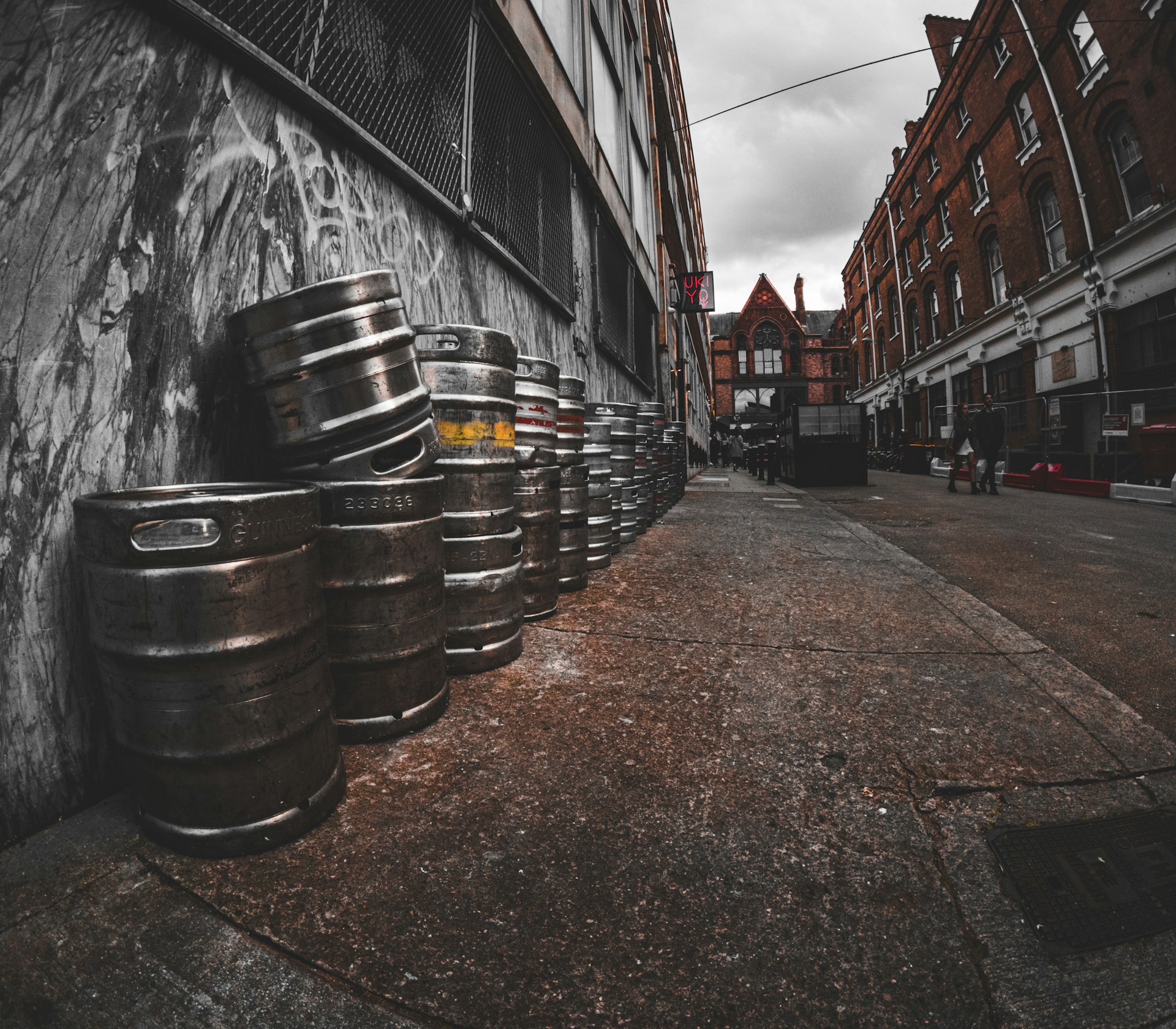
Stacked beer barrels lining narrow streets are more than a practical sight—they are symbols of how brewing shaped urban life. In cities like Dublin and London, breweries were once economic anchors, employing thousands and influencing everything from transport routes to neighborhood design. Narrow lanes behind pubs and warehouses were designed for deliveries, storage, and trade long before tourism or nightlife existed.
Beer barrels themselves tell a story of craftsmanship and logistics. Traditionally made from oak, barrels were engineered to preserve flavor, withstand transport, and allow beer to mature properly. Their standardized sizes helped regulate trade and taxation, turning beer into a measurable commodity rather than a homemade product. This standardization was crucial to the rise of commercial brewing and international exports.
Backstreets often became the unseen arteries of brewing districts. While customers entered pubs through welcoming front doors, the real work happened behind the scenes—barrels rolled in, empties collected, and deliveries scheduled with military precision. These spaces were gritty, functional, and essential to keeping beer flowing.
Today, these streets are quieter, often repurposed or preserved as historical curiosities. Yet they remain physical reminders of an era when beer was deeply woven into daily life, not just as a drink, but as a livelihood. Observing old barrels in urban settings offers a glimpse into how industry and community once moved together, shaping cities one delivery at a time.
Leave a Reply